Cold hardy cacti by Mats Rolfson
Mats Rolfson has grown hardy cacti for decades here in Sweden, and I am very glad he wanted to share his experiences on my website.Introduction
To grow winter hardy cacti successfully all depends on the climate you are living in. I repeatedly write cactus or cacti in this article but it is applicable for all drought tolerant plants such as Yucca, Sedum, Sempervivum, Agave and so on.
If you live in a climate that is hot in summer and cold and dry in winter you will have more success that if you live in a wet and cool climate.
Example given. There are people growing Yucca brevifolia in Idaho successfully in zone 5 (~ -30 C min avg temp) only because they have hot summers and dry and cold winters. It snows a lot in Idaho, but very seldom the snow is wet. Instead it’s very dry.
Where I live the temperature seldom goes below -20 C. Instead it’s around zero with alternating thaw and freezing. Further, the autumn is humid and mild. So there is no way Yucca brevifolia can grow where I live. This is typically for cacti (and alike). They don’t like humid winters but can survive if they get enough energy during summer.
You can in some extent compensate your climate by means of making a better microclimate. The most limiting factor for a plant to survive and thrive is how “hot” you can create your cactus bed. The hotter climate the more type of species you can grow in your cactus bed. This means that central Europe cactus beds can include more species than beds in northern Europe. A factor that extend your ability to grow cacti (and alike) successfully is to have good drainage. A wall, steep bank, a rock outcropping or a gravely area may furnish the needed drainage. I believe the best way to prepare for good drainage is to have a bed that is faced to the south and to have a slope with a gradient on 20-30 %. This maximize the solar energy intake and give you an excellent drainage. That is not easy to obtain, your garden might have it limits, but if you can, I would recommend that.
A small cactus bed in June (Mats Winberg)
Soil mixtures
Cacti can tolerate poor soil and conditions, and the more precipitation your site has, the poorer soil must be accommodated. To compensate the poor soil, you might have to add extra nutrients during the growing season.
My soil is prepared by having larger stones (30-50 mm) at the bottom of the cactus bed. That layer is around 200 mm deep. On top of the larges stones I add smaller pebbles, some clay and sand mixed together (100-150 mm deep). The bed also includes rocks, and as top layer stone mulching (10-20 mm size and 50 mm deep) is placed. My bed is raised in order to maximize drainage. I never add any humus. The reason is that nature will eventually do it by itself. Humus is not recommended since it retains water well. Many, if not all cacti (with exception of Opuntias) like rock crevices or being planted next to big rocks. E.g. Echinocereus triglochidiatus usually wants to be locked in between boulders. The boulders trap warmth and reduce soil water loss, given a good microclimate. Also the stone mulching will add heat to the surface which improves the micro climate.
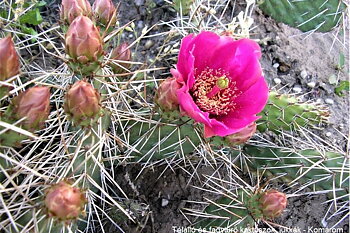
Opuntia tortispina (M. Rolfson)

Full Sun
As you might suspect, all cacti require full sun (at least 5 hours of sunlight) to thrive and flower well. Winter hardy cactus is no exception. They might live and perhaps produce new pads with 2 or 3 hours, but they will never flower. Even though they might grow in semi shade in Colorado or Arizona, but that is equivalent to full sun 8-10 hours in Sweden.
Opuntia macrorhiza, Wisconsin (M. Rolfson)
Water requirements
All winter hardy cacti are drought tolerant which means they don’t need to be watered at all during growing season, unless they have just been planted. However, if you except good weather conditions they will benefit some watering and low nitrogen fertilizer during April (after they have perked up) to June.
During spring and early autumn I will also give a small amount of K and P fertilizer. Phosphorous is beneficial for root growth and potassium will hardening off the plant for the winter.
It is also extremely important to remove all soil from the roots if you have had them in a pot, otherwise the plant is more easy to rot. Many nurseries use organic material in their soil and that have to be removed.
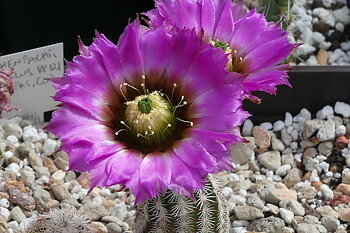
Echinocereus mojavensis fa inermis x baileyi fa albispinus (M. Rolfson)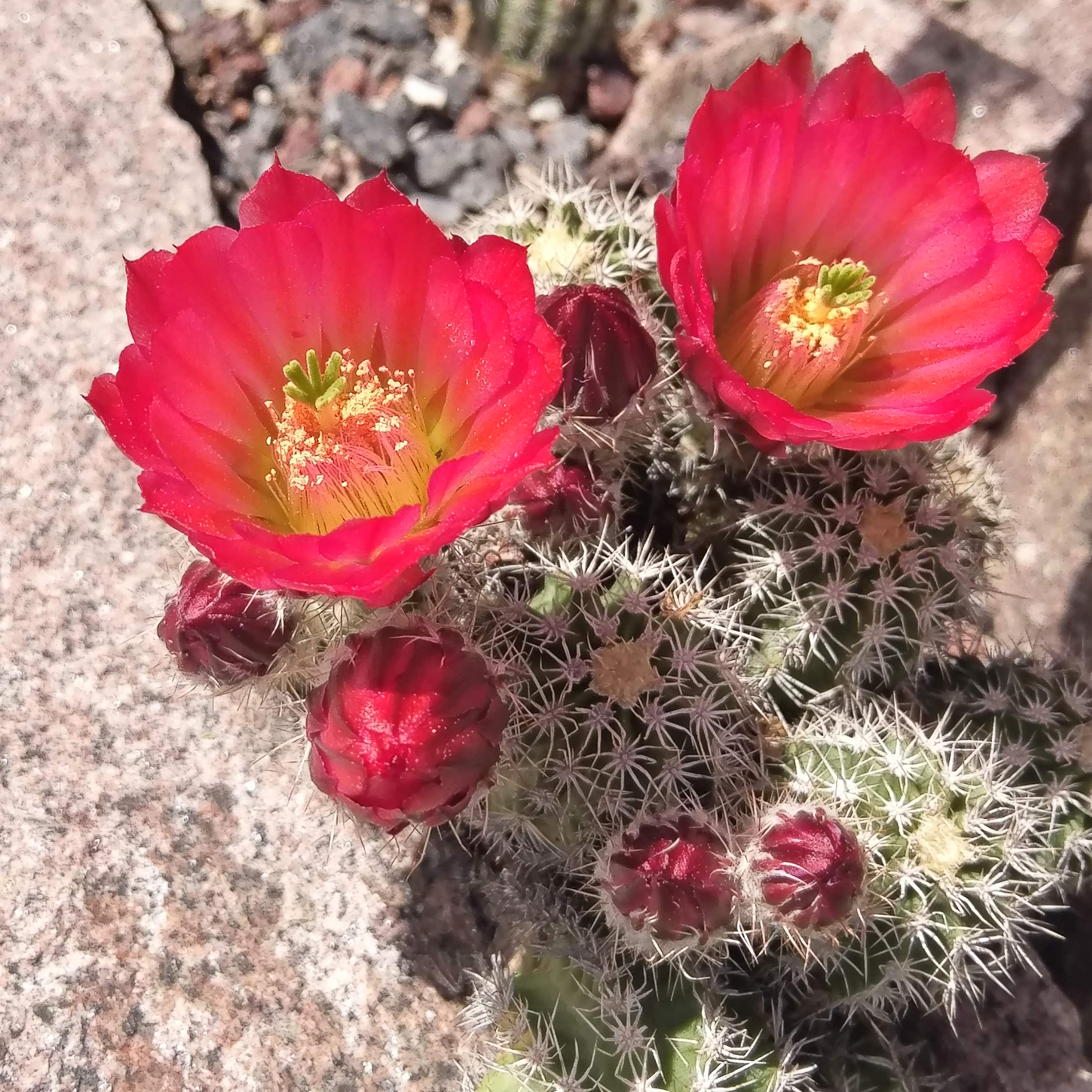
Hardiness
Winter hardy as a term is not exact and its criteria is not easily defined, as the example of Yucca brevifolia showed in the text above.
Where is the natural habitat of a plant? The answer on that question will give some indication of the plants that are very hardy, marginally hardy or not hardy etc. But it can only be a guide. So in the end, a large part of the call must be yours, meaning you have to test yourself.
Since habitat location will be such an important part of your selection, you should be able to evaluate some location data. So my advise when you select plants to you cacti bed; buy plants with locality known. Many plants are cultivars and these cannot be judge from their locality, since it is unkown. Instead you just have to rely on common data for the taxon and the cultivar. E.g Opuntia xfragilis ‘Fussen’ is a hybrid with unkown second parent. But since one of the parent is Op. fragilis it is very likely it is very hardy. Another example Echinocereus triglochidiatus from El Paso County, Colorado is by far the north habitat of this species. Hence it should be very cold tolerant.
Also consider locality at high altitude. Theoretically, the temperature decrease around 10 C per 1000 meters. An Opuntia trichophora at 3000 meter in Utah or an Echinocereus triglochidiatus at 2750 m in Colorado will endure extreme temperatures during the winter.
Other plants are surprisingly hardy despite the natural habitat. Cylindropuntia davisii grows in Quay county in New Mexico on the border to Texas. It will be cold spells there but not that severe. The coldest month is January with min temperature around -3 C. It is said that Cylindropuntia davisii can survive -40 C.
Echinocereus coccineus SB 1729 (M. Winberg)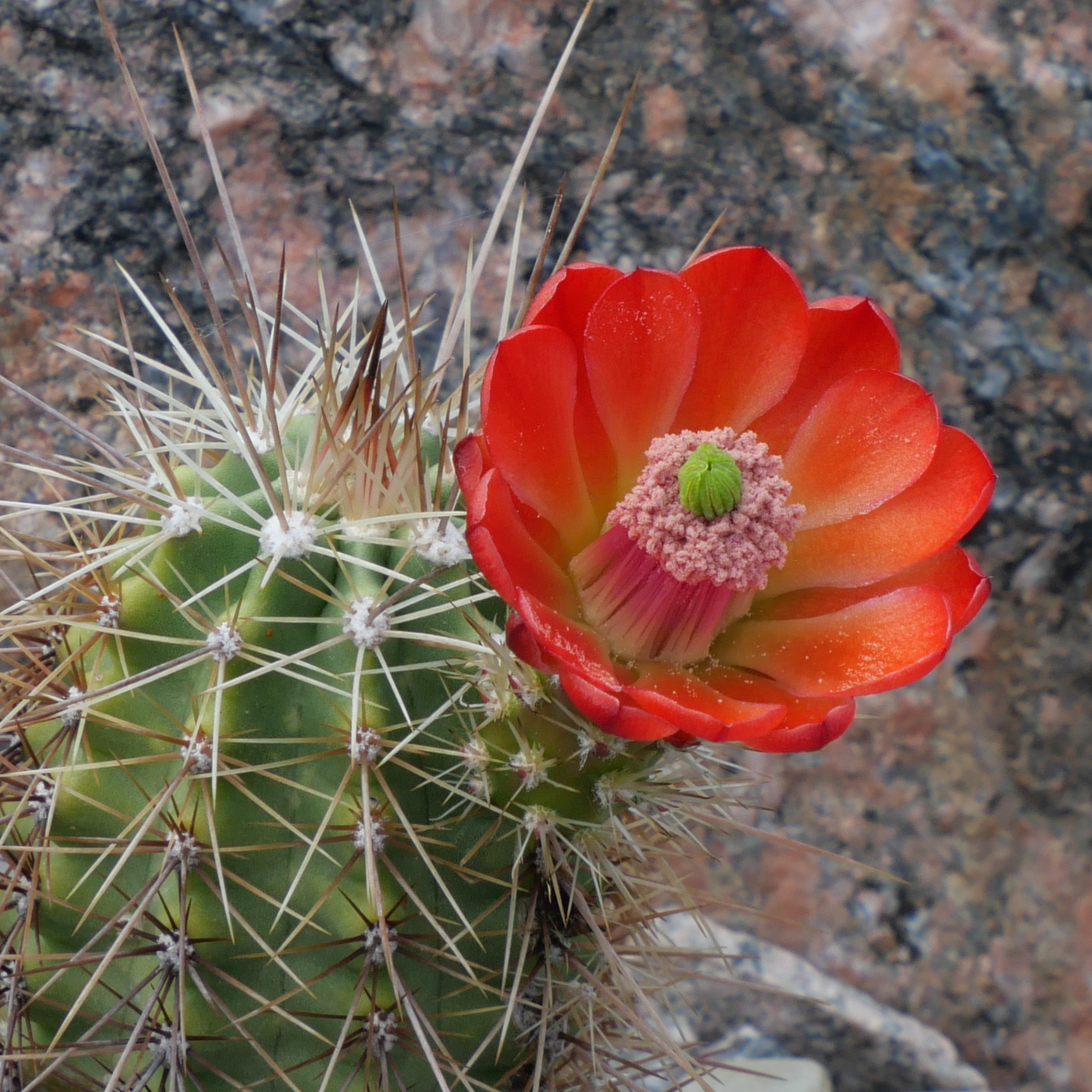
Winter protection
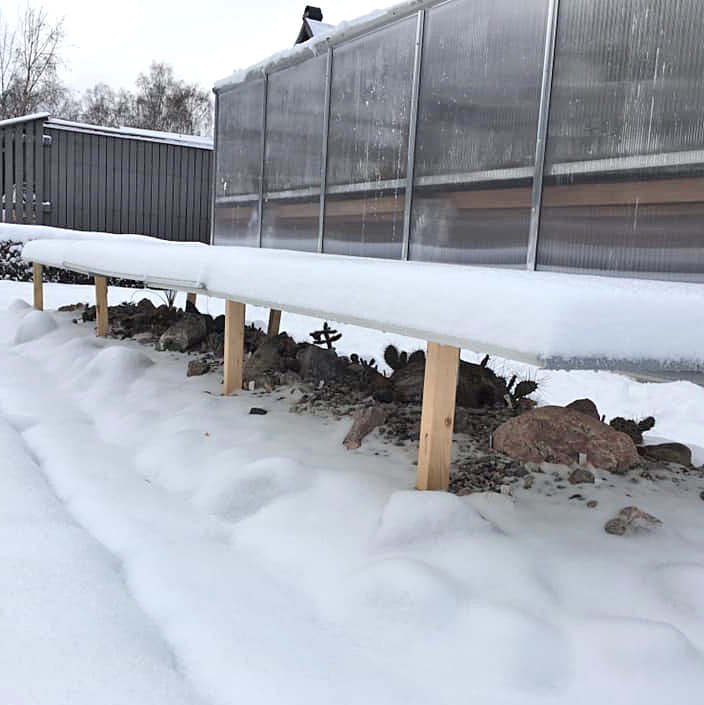
If you live in an area with dry and cold winters, no protection is needed. But for many places in Northern Europe and Central Europe where there is thaw and freezes, rain and snow all winter all cacti thrives better with overhead protection. Best is to setup the protection in September. Normally September has weeks of good weather here in Sweden and the soil can dry out. Before the october and november rains comes you will then have a good start for the plants over the winter. The cover can be removed in april.
Of course there are many plants that handles a wet winter without a problem, but even those looks better if they are covered.
You could also grow them all year round in a cold frame. Echinocereus, Escobaria, Pediocactus, Sclerocactus do well even at very low temperatures and it is easy to keep them dry. 
Plant Selection
Fully hardy cacti (no overhead protecion is needed, but recommended)The following Opuntias are fully hardy where I live:
Opuntia fragilis including all hybrids
Op. polyacantha including all its hybrids
Op. macrorhiza, Op. pottsii, Op. humifusa, Op. caespitosa, Op. tortispina, Op. cymochila, Op. pinkavae (a little sensitive to wet soil), Op. debreczyi, Op. xSmithwick, Op. "budapest".
Cylindropuntia imbricata has been proven to be very hardy here. Also Cylindropuntia whipplei and davisii.
Many Echinocereus are also hardy and doesn't mind my climate, such as Echinocereus triglochidiatus, E. mojavensis, E. coccineus, E. viridiflorus
Escobaria vivipara and E. missouriensis are perfectly hardy too.
Maihuenia poepiggi is a nice growing plant that grows in large matts.
Hardy cacti (overhead protecion is strongly prefered from September until April)
The main reason why they are marginally hardy is due to the wet atmosphere. The soil in covered bed does not completely dry because moisture is pulled up from the ground och dew is coming and the wet remains.
Opuntia aurea, Echinocereus perbellus, E. chloranthus, Escobaria sneedii, Yucca baccata, Agave utahensis A. parryi, A. neomexicana, A. harvardiana
Not very hardy cacti (the most sensible plants should be placed in cold greenhouse or a roofed porch)
Here they are protected against winter rain, but not snow that blows in. The snow will not hurt them.
Op. arenaria, Op. basilaris v. brachyclada, Yucca baccata, Y. torreyi, Y. rostata, A. ovatifolia
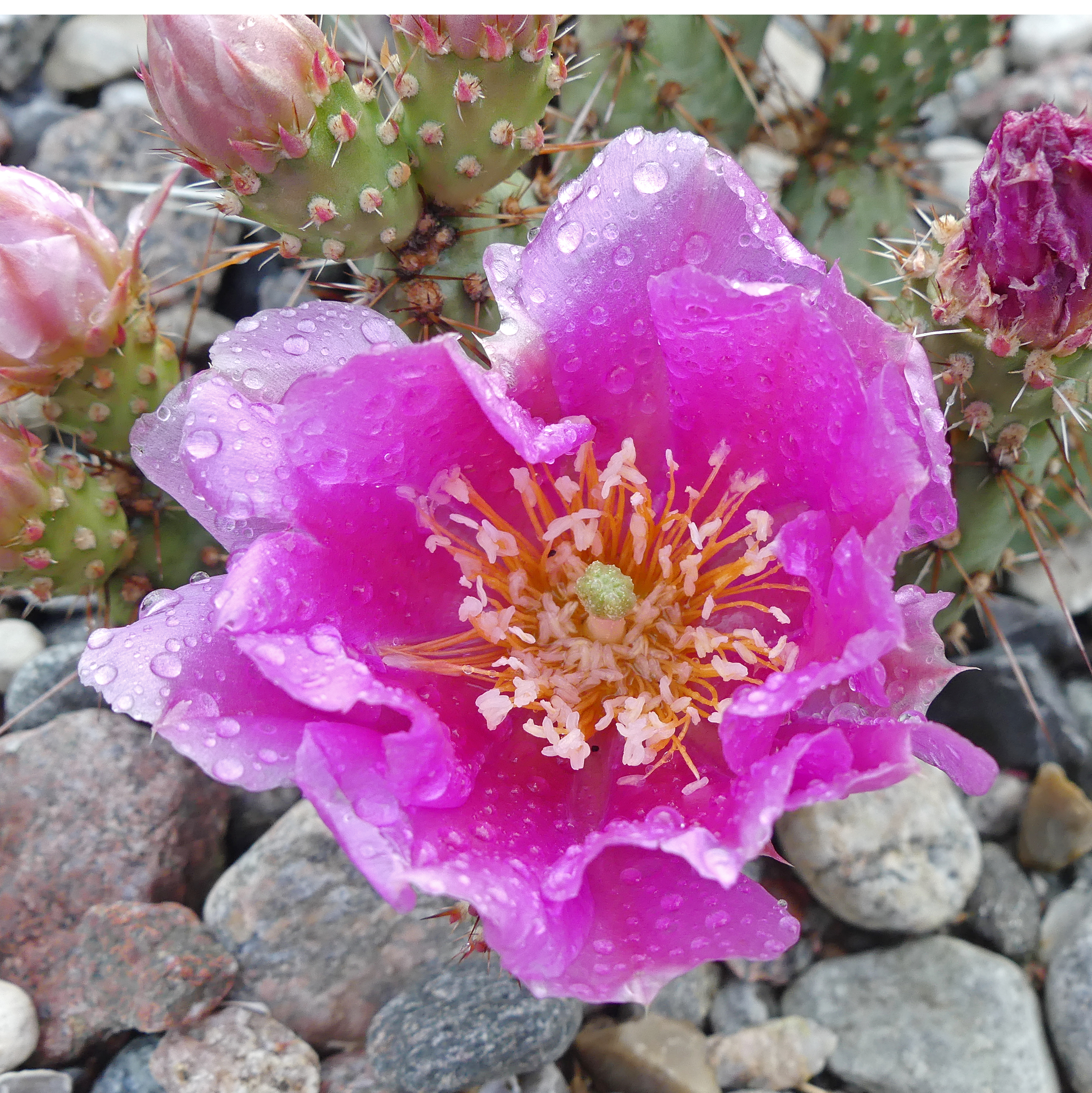
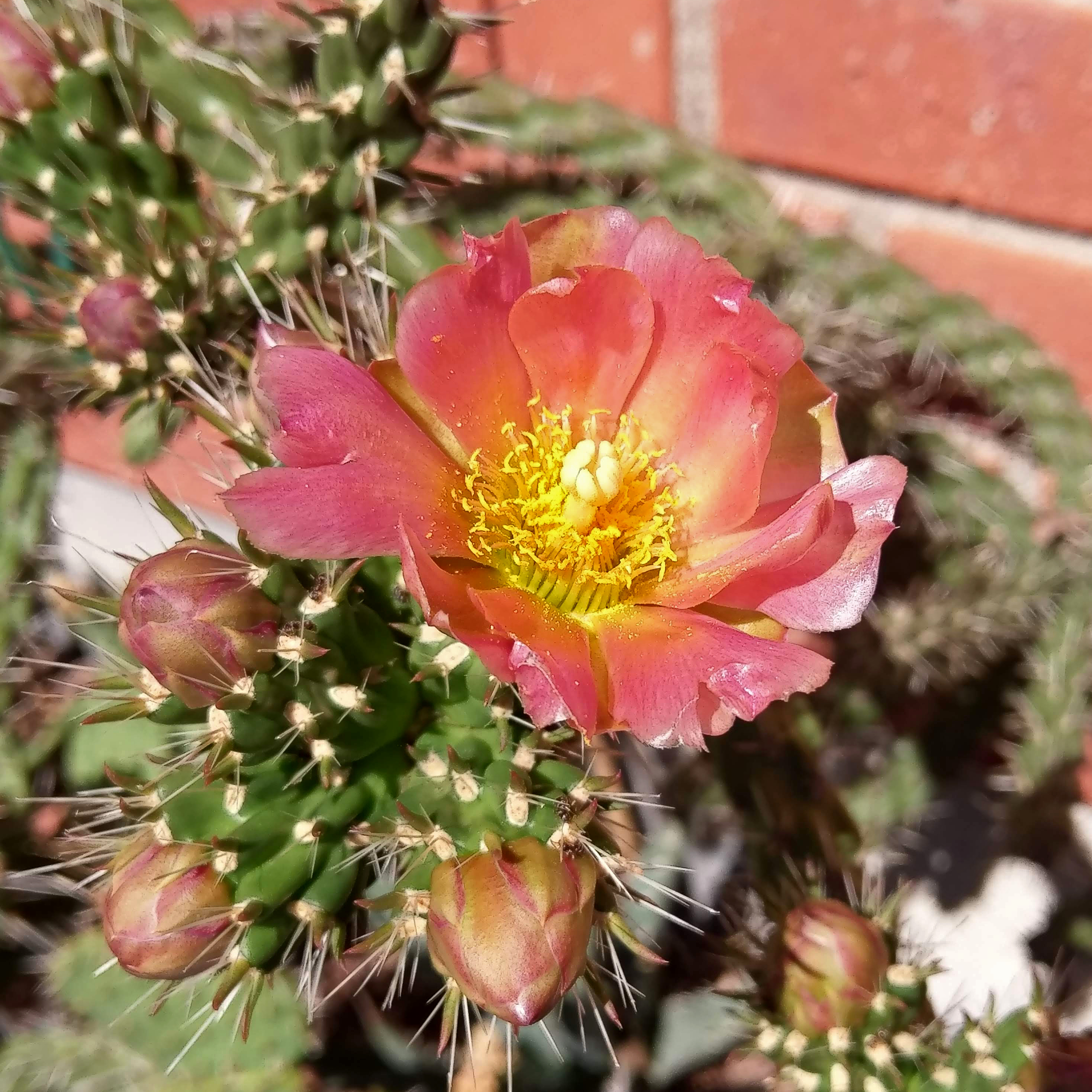
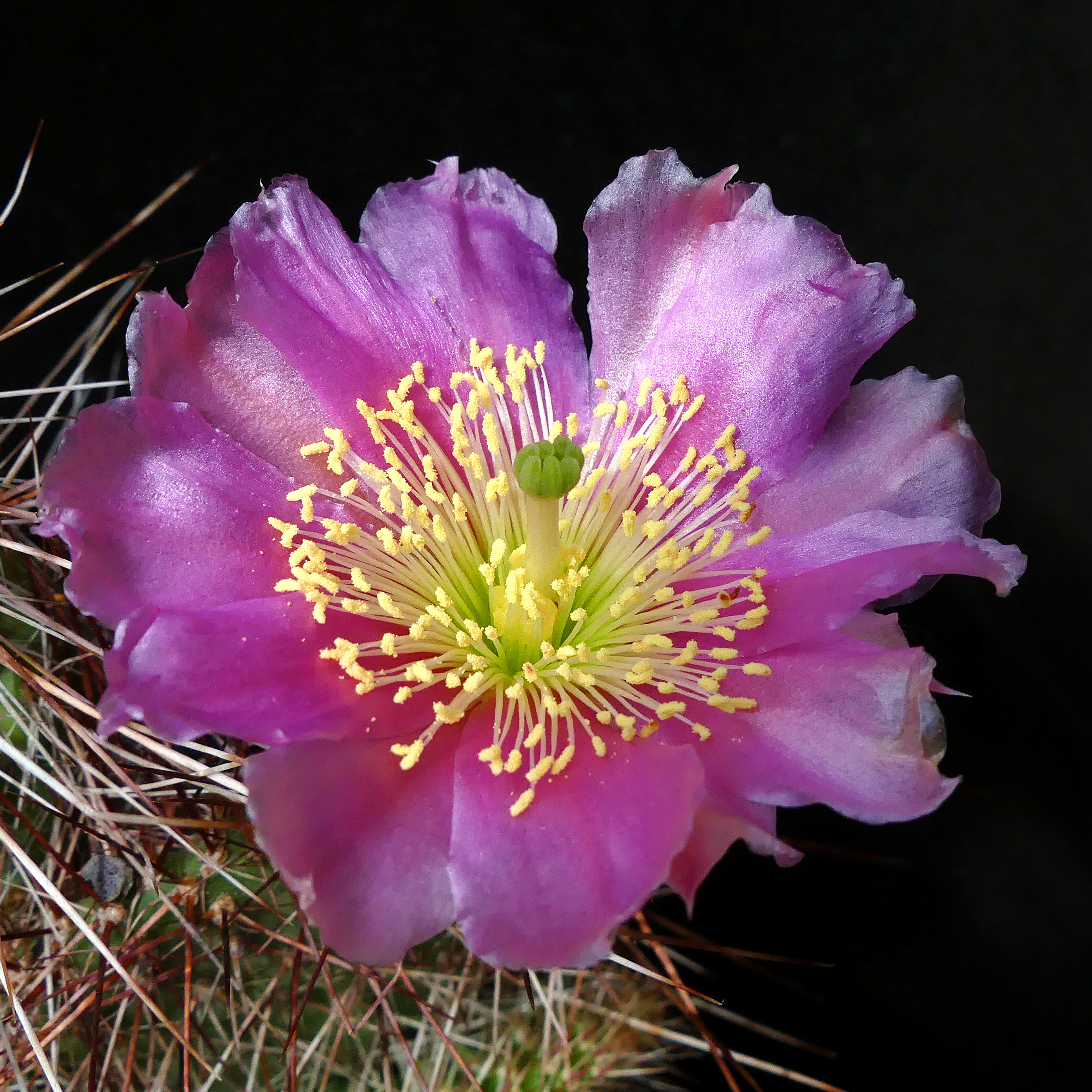
A selection of very hardy plants for the rock garden or cold frame:



Below: